
Arrest Warrants in Castro County
An arrest warrant is a written magistrate's order to arrest. The 64th or 242nd District Court owns felony files. A sworn complaint or affidavit usually reaches the judge first, and the magistrate weighs that oath before authorizing any warrant. Castro County publishes no public warrant roster and no local application form. For a felony, start with the District Clerk. Lower-level process may come from a countywide JP or a municipal judge instead. The issuing court and the serving agency can differ, so confirm both.
Castro County Arrest Warrants Start With a Magistrate
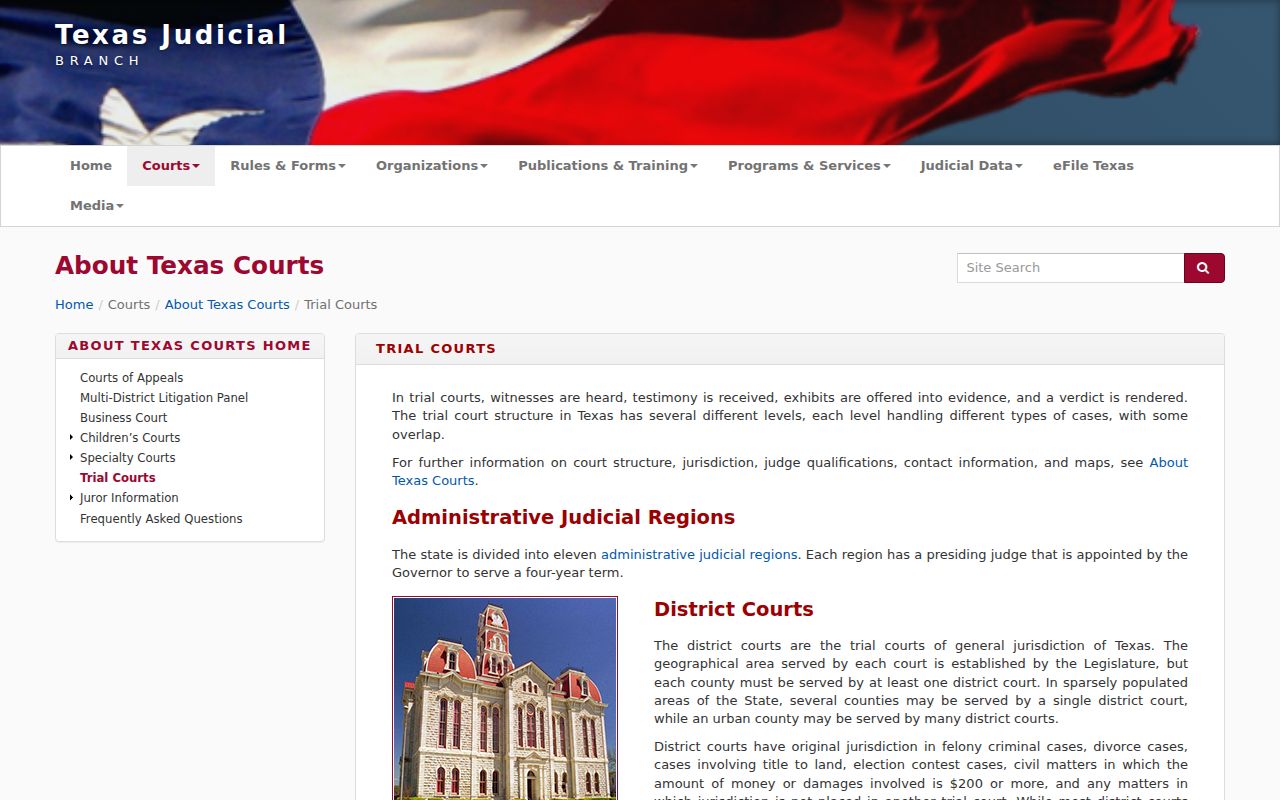
Code of Criminal Procedure Chapter 15 spells out what a Castro County arrest warrant must hold. It needs a name or reasonably definite description, a stated offense, and the magistrate's signature and office. The magistrate reviews the supporting oath first. Only then is process authorized. These statewide rules reveal no local number format or public record layout. The Texas Judiciary trial-courts page lays out the structure and authority of lower courts and JPs.
Ask which court accepted the complaint and which clerk maintains the resulting case file.
What a Castro County Arrest Warrant Contains
State law fixes what a warrant must show. Castro County posts no sample warrant and no public result schema. The table separates statutory elements from fields only the clerk can confirm. A sample stamp is not a local case number.
| Warrant number | Format not published |
|---|---|
| Name or description | Chapter 15 requires a name or reasonably definite description. |
| Offense | The order must state the offense under Article 15.02. |
| Issuing authority | Ask for the court, magistrate, and file number. |
| Bond terms | No countywide bond schedule or local result field was located. |
| Issue and service dates | Ask whether the record shows issuance, service, return, or recall. |
Castro County Arrest Warrant Files Follow Court Level
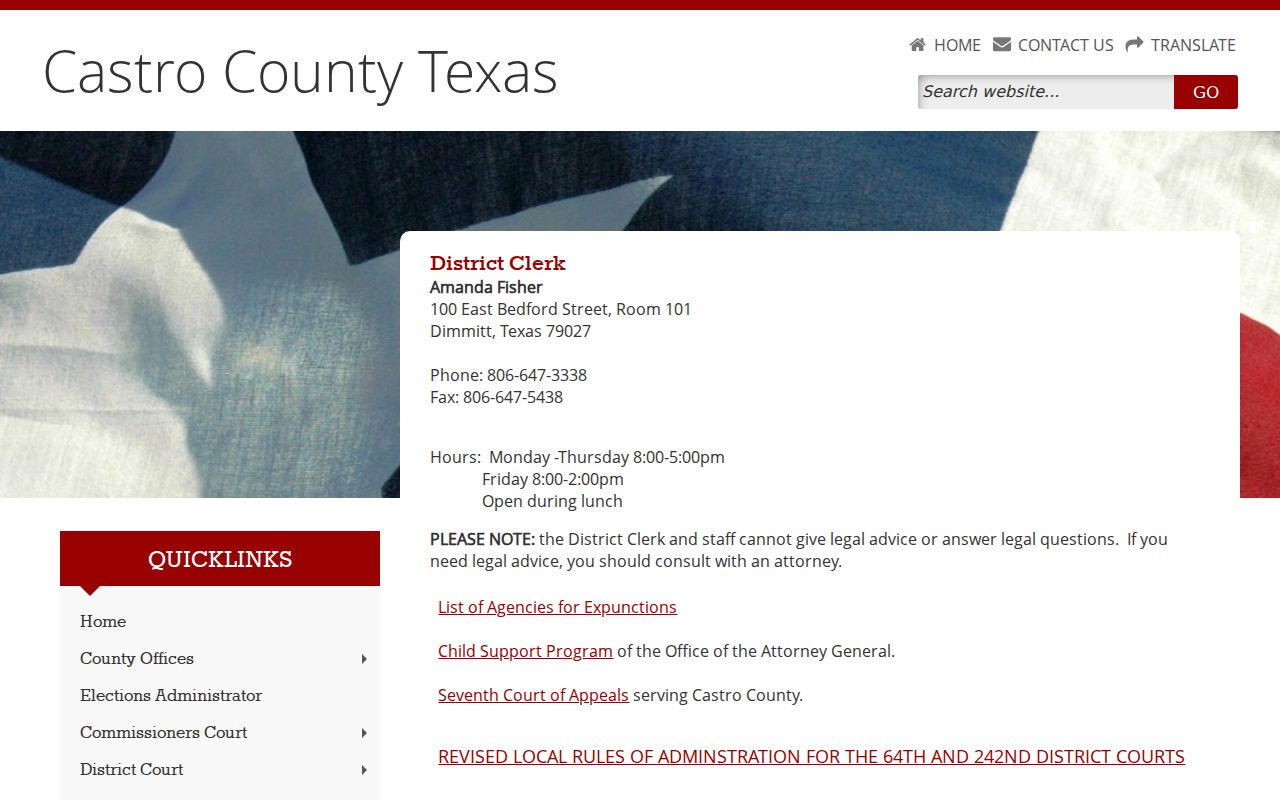
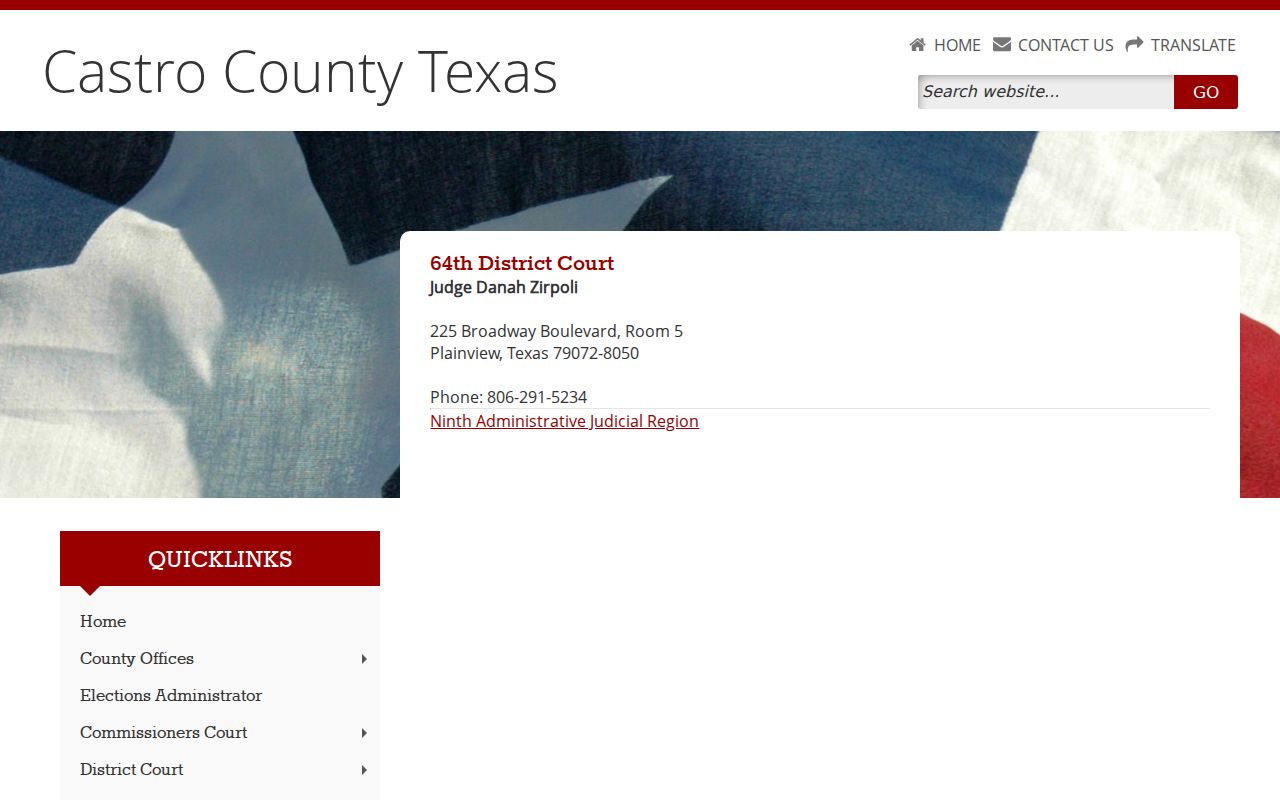
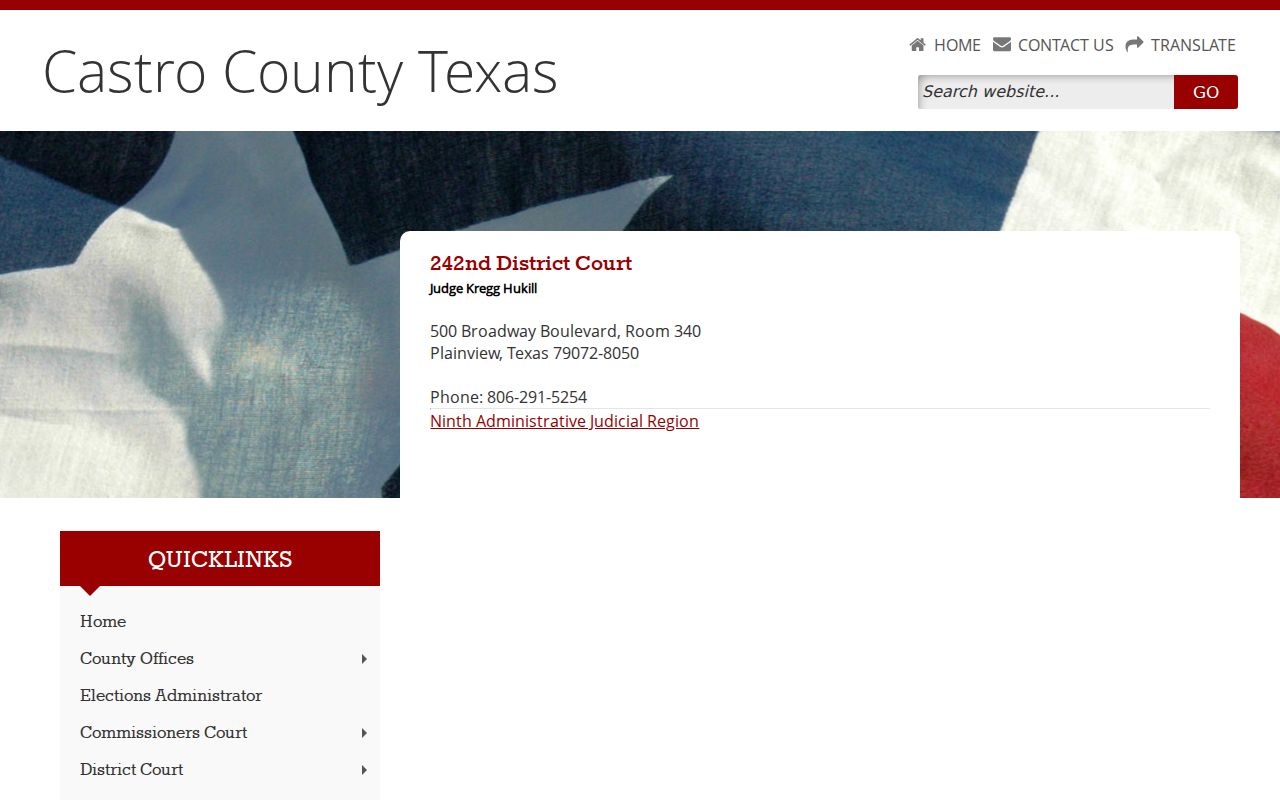
A felony case in Castro County starts its paper trail at the District Clerk. That office shares Room 101 with the County Clerk. They even share a phone contact. The records they hold, though, are not the same. The 64th and 242nd District Courts serve Castro County and list their judge contacts in Plainview. The District Clerk’s official page lays out the public office route, while the 64th and 242nd court images identify the court contacts; they do not show any warrant or person record.
For the 64th court, see its official contact page.
The 242nd District Court’s county page supplies its separate route.
Ask the clerk which court has the underlying file before sending a records request.
How Castro County Arrest Warrants Are Served
The court issues the order. An authorized officer or agency then serves it. The Castro County Sheriff is the countywide law-enforcement and custody contact. Dimmitt runs its own police department with 24-hour on-duty coverage, and Nazareth's city directory lists a marshal. After an arrest, booking and magistration follow. No office here states which agency serves each JP or municipal warrant. The county constable page names no separate channel. Ask the issuing court or sheriff about the custody route and bond information before you travel.
Castro County Officers Do Not Share One Warrant Roster
Service and ownership are separate questions. A sheriff may hold county process while Dimmitt Police handles city public-safety calls. Nazareth's directory identifies a marshal. Hart's OCA court entry does not establish a dedicated police warrant page. Confirm the serving agency with the issuing court instead of assuming every order goes to the sheriff. The county sheriff contact page is the official public route for Castro County custody or service questions. VINELink there covers custody status, not warrant searches. Call the sheriff's general number to ask which office can answer the specific process question.
Arrest Warrant vs Summons vs Bench Warrant
Section 6 sorts out three distinct court instruments: what each one orders, when a Castro County court uses it, and how a person responds. See bench warrants for the companion detail.
| Feature | Arrest Warrant | Summons | Bench Warrant |
|---|---|---|---|
| What it orders | Arrest under the order | Appear on a stated date | Response to missed court obligation |
| Basis | Probable-cause process | Notice to appear | Failure to appear or comply |
| Who issues | Judge or magistrate | Authorized court process | Court that set the date |
| How to respond | Confirm status and counsel-led next step | Follow the notice instructions | Ask about reset, motion, or required appearance |
Castro County Arrest Warrants and Magistration Timing
Article 15.17 of the Texas Code of Criminal Procedure sets the clock. A magistrate must see the person without unnecessary delay. That cannot stretch past 48 hours after arrest. The rule is statewide, so it promises nothing about how long a voluntary appearance or booking takes in Castro County. The sheriff publishes no jail intake hours, bond lobby schedule, or walk-in surrender instructions for Castro County. Ask the sheriff or your counsel about the current custody route before traveling.
Texas Code of Criminal Procedure Chapter 15What to Do If There's a Warrant for You
Find the issuing court first. Ask whether an arrest warrant is active, whether an appearance is required, and what bond or recall process applies. The District Clerk can route a felony-file question. The Sheriff's Office handles county-held service and custody questions. A municipal or JP matter goes back to that court. Talk with a Texas criminal-defense attorney first. Do that before surrendering, posting bond, or filing a motion to recall or quash, because no public Castro County source offers a universal bond schedule or walk-through plan.
Important: Get case-specific legal advice and the issuing court’s current instructions before appearing or making a payment.
Castro County Arrest Warrants Can Have Restricted Records
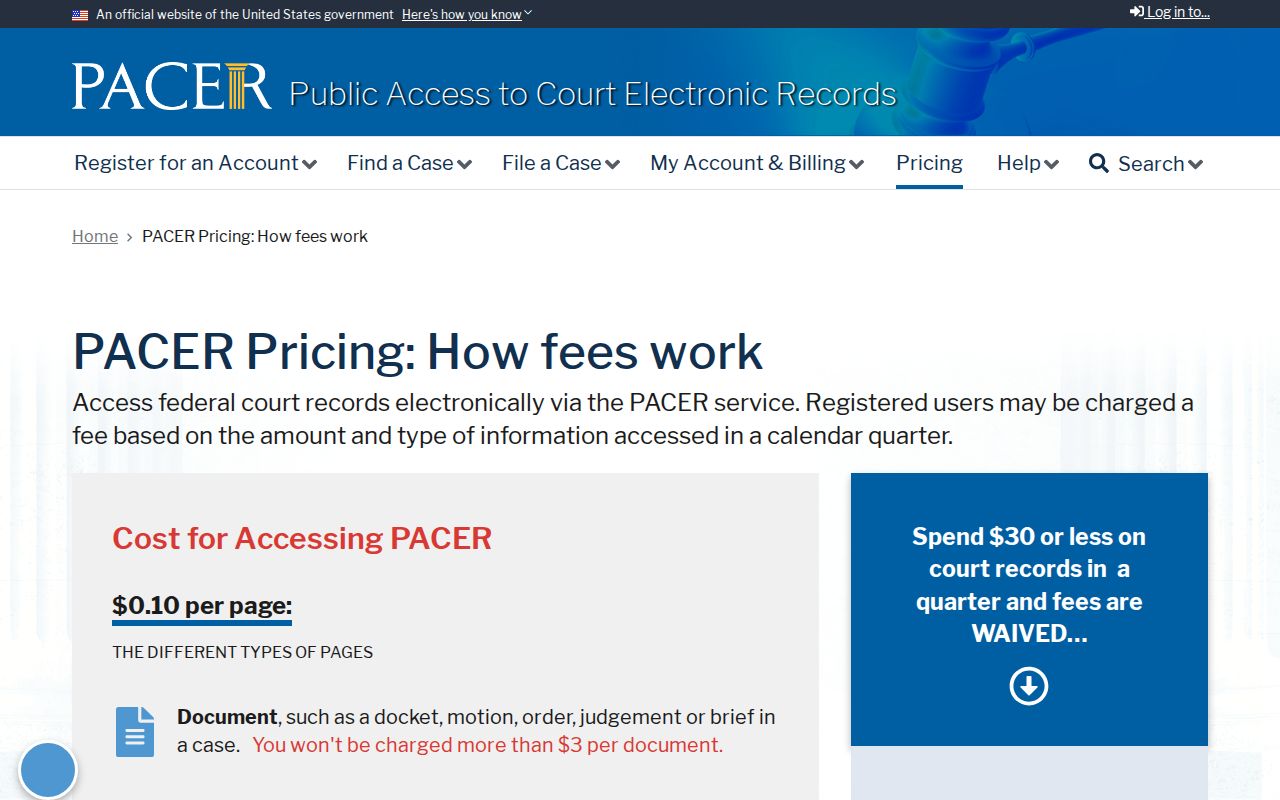
Not every warrant shows up in a public file. An unserved or sealed warrant may be absent, and a law-enforcement exception can limit release. Texas Family Code §58.010 protects juvenile arrest warrants and supporting papers too. A public-record request cannot establish that no process exists. Federal matters run on a separate system. The Northern District of Texas places Castro County in the Amarillo Division. PACER offers federal docket access, but it is not a complete warrant roster, and sealed or non-docketed process may be missing. The federal PACER fee page explains what access costs.
For anything federal, call the Amarillo Division or lean on a lawyer; the Castro County clerks have no power to recall federal process.